


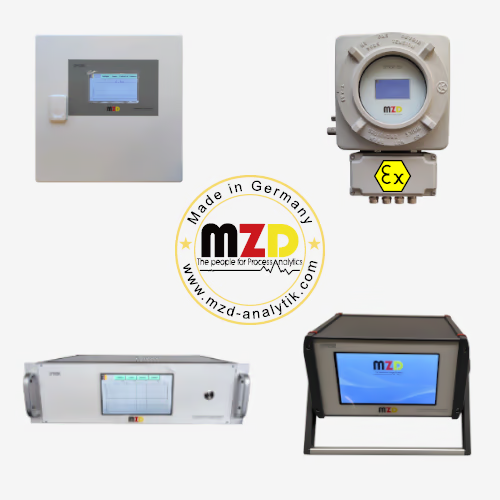
Description
The percentage-level (%) zirconia (ZrO2) oxygen analyzer integrated with a Type B thermocouple is an industrial-grade analytical solution engineered for extreme high-temperature combustion control and molten process optimization. Operating in harsh environments from 1000°C up to 1700°C, the analyzer utilizes a drift-free, corrosion-resistant Type B platinum-rhodium thermocouple to provide flawless thermodynamic compensation for the Nernst equation. Completely shifting away from semiconductor vacuum-leak checks, this heavy-duty instrument is dedicated to glass melting tanks, steel reheating furnaces, cement rotary kilns, and waste incinerators. By continuously monitoring percentage-level (%) excess oxygen in flue gases, it optimizes the fuel-to-air ratio, slashes fuel consumption, and reduces greenhouse emissions.
Principle
At high temperatures, stabilized zirconia acts as an oxygen-ion conductor; the oxygen concentration difference between its two sides generates a measurable voltage used to calculate oxygen levels via the Nernst equation.
Application
• Glass Melting & Refining Furnaces (1400°C – 1600°C)
Flue Gas Excess Oxygen Monitoring: Continuous measurement of percentage-level oxygen (1% to 4% O2) in the regenerator and flue gas ducts of float glass or container glass melting tanks. This is critical to ensuring optimal combustion efficiency and fuel-saving.
Glass Melt Redox State Control: Monitoring the oxygen partial pressure (PO2 ) directly above or within the molten glass batch to prevent chemical reduction of glass components, which ruins optical clarity and color consistency.
• Iron & Steel Metallurgy (1100°C – 1600°C)
Slab Reheating & Soaking Furnaces: Monitoring percentage-level O2 in hot steel reheating furnaces prior to rolling. Keeping oxygen levels strictly controlled (typically around 1% to 2%) reduces the formation of destructive iron oxide scale (surface metal loss).
Coke Oven Gas Combustion: Real-time feedback control of excess oxygen in high-temperature coke oven batteries to ensure uniform heating and prevent dangerous unburned fuel leaks.
• Cement & Lime Rotary Kilns (1200°C – 1450°C)
Kiln Inlet Flue Gas Analysis: Tracking the oxygen percentage (1.5% to 3% O2) in the highly abrasive, dust-laden exhaust gas at the back-end of cement rotary kilns. This prevents incomplete fuel combustion and limits hazardous carbon monoxide (CO) spikes.
• Municipal & Hazardous Waste Incineration (1000°C – 1300°C)
Primary/Secondary Combustion Zone Control: Monitoring high-temperature flue gas oxygen levels to guarantee complete decomposition of toxic compounds (like dioxins) while protecting boiler tubes from high-temperature corrosion caused by fluctuating fuel compositions.
• Coal-Fired & Biomass Power Boilers (1000°C – 1400°C)
Superheater Zone Combustion Tuning: Direct in-situ measurement of remaining O2 percentages in the high-temperature radiant pass of utility boilers to dynamically balance coal-to-air ratios, reducing coal consumption and nitrogen oxides ("NOx" ) formation.
Measurement components and ranges
• O2: 0 ~ 10/100/1000/10000ppm
• O2: 0 ~ 10% / 25% / 100%
For detailed introduction, please refer to Zirconia Oxygen Analyzer(ppm/percent).