


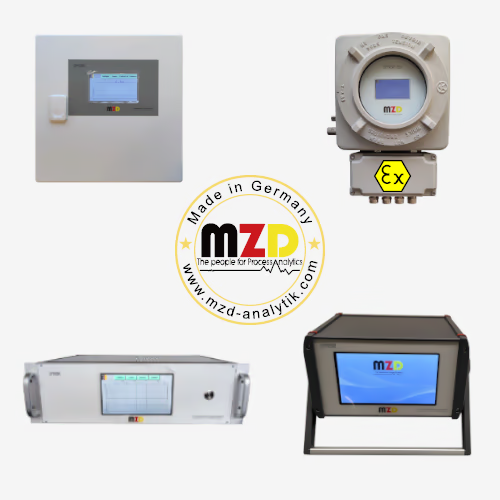
Overview
The ppm-level and sub-10% (percentage-level) SO2 gas analyzers are widely used in coal-fired power plants, cement kilns, metallurgical smelting, sulfuric acid production, and chemical tail gas desulfurization. While the ppm-level analyzer is tailored for continuous emission monitoring (CEMS) and trace impurity control to ensure strict environmental compliance, the sub-10% analyzer excels in flue gas desulfurization (FGD) inlet load analysis, converter efficiency calculation, and furnace process control. Delivering precise measurements across diverse concentration ranges, it serves as a critical instrument for evaluating SOx abatement and optimizing process efficiency.
Principle
UV-LED radiation is divided into measurement and reference paths by a beam splitter. The reference beam directly reaches the detector, which converts it into a reference voltage value. Using this reference signal, the aging effect of UV-LED can be almost completely compensated. The measuring beam enters the sample cell, and the gas in the sample cell is absorbed by the radiation in it. The absorption behavior is recorded by the measuring detector and used to calculate the gas concentration in the measuring cuvette.
Application
• Continuous Emission Monitoring (CEMS) [ppm Range]
Environmental Compliance: Continuous measurement of low-concentration SO2 (ppm level) in exhaust stacks of power plants, industrial boilers, and incinerators to meet EPA and regional emission limits.
DeSOx System Outlet Monitoring: Real-time analysis at the outlet of Flue Gas Desulfurization (FGD) systems to verify scrubbing and abatement performance.
• Flue Gas Desulfurization (FGD) Process Control [Sub-10% Range]
FGD Inlet Load Analysis: Measuring high-concentration SO2 (up to percentage levels) at the inlet of desulfurization towers, allowing feed-forward control to optimize chemical reactant dosing (such as lime or ammonia slurry).
Acid Gas Scrubbing: Monitoring sour gas streams in refineries and chemical plants before treatment to prevent sulfur overload in recovery units.
• Sulfuric Acid Production & Smelting Processes [Sub-10% Range]
Converter Efficiency Tracking: Continuous analysis of high-concentration feed and loop gas (typically 1% to 10% SO2) in sulfuric acid manufacturing plants to calculate SO2→SO3 conversion rates.
Metallurgical Smelting Tail Gas: Monitoring off-gas from non-ferrous metal smelting furnaces (copper, lead, zinc) for sulfur recovery and process optimization.
• Industrial Kiln & Combustion Optimization [ppm to Sub-10% Range]
Cement & Glass Production: Monitoring process gas inside cement kilns and glass melting furnaces to evaluate raw material sulfur reactions and control process chemistry.
Coal Gasification Processes: Analyzing syngas composition to optimize sulfur removal steps and protect downstream catalysts.
Measurement components and ranges
• SO2: 0 ~ 10ppm up to 10%(Vol)
For detailed introduction, please refer to Ultraviolet photometry analyzer.